Have you ever wondered how sunlight hitting your rooftop solar panels turns into electricity that powers your refrigerator, television, air conditioner or washing machine?
Solar energy is becoming an increasingly practical option for Australian households looking to manage electricity costs and reduce their reliance on grid power.
Across Victoria, homeowners in Melbourne, Geelong, Ballarat, Bendigo and surrounding regions are exploring rooftop solar systems to generate electricity for everyday household activities.
But how exactly does solar electricity travel from your rooftop panels to the appliances inside your home?
At Countryman Solar, we help Victorian homeowners understand and adopt smarter solar energy solutions. In this guide, we’ll explain how solar panels generate electricity, how solar inverters work, which household appliances can run on solar power and how battery storage can help you use more of the energy you produce.
How Do Solar Panels Generate Electricity?
Solar panels convert sunlight into usable electrical energy through a process called the photovoltaic effect.
Each solar panel contains numerous photovoltaic (PV) cells, typically made from semiconductor materials such as silicon.
When sunlight reaches these cells, energy from the light causes electrical charges to move, generating an electrical current.
The electricity produced by solar panels is known as direct current (DC) electricity.
However, most Australian household appliances operate using alternating current (AC) electricity.
This is why a residential solar installation requires an inverter to convert the electricity into a form suitable for your home.
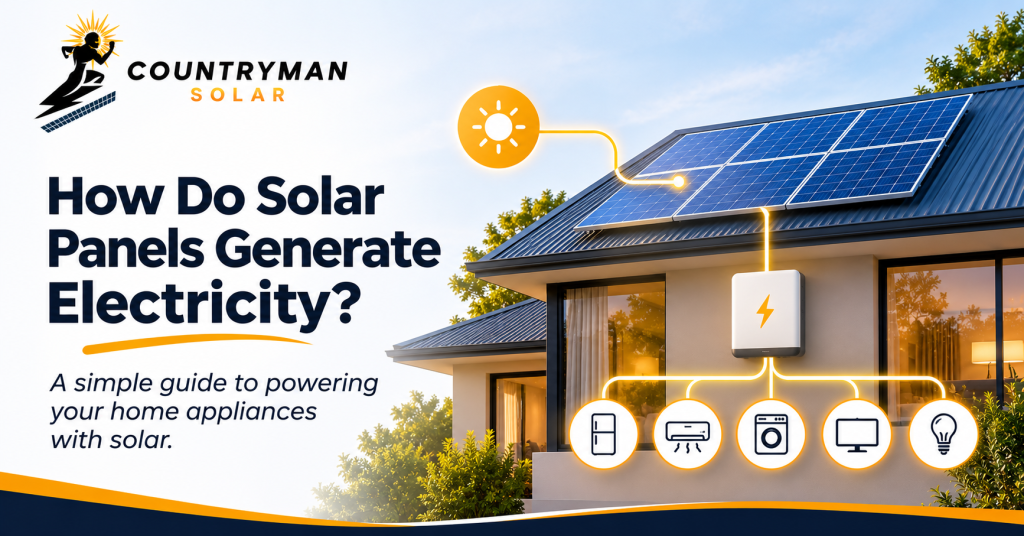
Step-by-Step: How Solar Energy Reaches Your Appliances
Step 1: Sunlight reaches the solar panels
Solar panels installed on your roof absorb energy from sunlight throughout the day.
Step 2: Solar cells generate DC electricity
Photovoltaic cells convert the absorbed sunlight into direct current electricity.
Step 3: The inverter converts DC into AC electricity
A solar inverter converts the electricity into alternating current suitable for household use.
Step 4: Electricity flows through your home’s electrical system
The generated electricity becomes available to appliances through the home’s electrical circuits.
Step 5: Excess electricity is managed
When your solar system produces more electricity than your household needs, the surplus may be exported to the electricity grid or stored in a compatible battery.
This process happens automatically, allowing your home to make use of solar electricity whenever sufficient sunlight is available.
What Is the Role of a Solar Inverter?
A solar inverter is one of the most important components of a residential solar power system.
Although solar panels generate electricity, most household appliances cannot directly use the DC electricity produced by the panels.
The inverter converts this electricity into AC power that can be used by your home.
Modern solar inverters can also provide additional features, depending on the model and system configuration.
These may include:
- Monitoring solar electricity production
- Tracking system performance
- Identifying certain system faults
- Managing electricity conversion
- Supporting compatible battery storage
- Providing information through mobile applications
Choosing a suitable inverter is important because its capabilities influence the performance, reliability and future flexibility of your solar system.
At Countryman Solar, we offer solar equipment options from established manufacturers to help homeowners find systems suited to their property and electricity requirements.
Which Home Appliances Can Run on Solar Power?
One of the biggest advantages of installing rooftop solar panels is that the generated electricity can help power many everyday household appliances.
You do not need a separate solar connection for each appliance.
Once electricity passes through the inverter, it becomes available through your home’s electrical system.
1. Refrigerators and Freezers
Refrigerators operate throughout the day to keep food and beverages cool.
A rooftop solar system can supply electricity towards refrigeration during daylight hours, reducing the amount of electricity purchased from the grid when generation is sufficient.
2. Air Conditioners and Cooling Systems
Victoria can experience high temperatures during summer, increasing demand for air conditioning.
Solar panels often generate substantial electricity during sunny daytime periods, which can coincide with increased cooling requirements.
Using solar-generated electricity to operate your air conditioner may help reduce grid electricity consumption.
3. Washing Machines and Dishwashers
Washing machines and dishwashers can consume considerable electricity depending on the program selected and whether water heating is required.
Operating these appliances during periods of strong solar generation can increase the amount of solar electricity used directly within your home.
4. Televisions, Computers and Wi-Fi Routers
Home entertainment systems, laptops, desktop computers and internet equipment can also benefit from solar-generated electricity.
For households where people work or study from home, daytime solar generation can help support regular electricity demand.
5. Lighting and Small Electrical Appliances
LED lights, fans, kitchen appliances and everyday electronic devices can all use electricity supplied by a rooftop solar system.
The amount of solar electricity available depends on weather conditions, system size and other household loads operating simultaneously.
6. Electric Hot Water Systems
Electric water heating can be a significant part of household electricity consumption.
With appropriate controls and system design, some electric hot water systems can be scheduled to operate during solar generation hours.
This can help improve solar self-consumption.
7. Electric Vehicle Charging
Homeowners with electric vehicles may also be able to charge their vehicles using solar-generated electricity.
A compatible EV charger and suitable charging schedule can help maximise the use of available solar generation.
However, EV charging demand can be substantial, so the suitability of a system depends on its generation capacity and household electricity requirements.
What Happens When Solar Panels Generate More Electricity Than Your Home Needs?
Solar electricity generation and household consumption are not always equal.
For example, your solar panels may generate substantial electricity during a sunny afternoon while only a few appliances are operating.
When your solar system produces more electricity than the home is using, the excess energy can be managed in different ways.
Exporting Excess Solar Electricity to the Grid
In a typical grid-connected solar system, unused electricity may be exported to the electricity network.
Depending on your electricity retailer, tariff and export arrangements, you may receive a feed-in tariff credit for eligible exported electricity.
Export limits and other network requirements can affect how much electricity may be exported.
Storing Excess Solar Electricity in a Battery
If your home has compatible battery storage, surplus solar electricity may be stored for use later.
This stored electricity can help power household appliances during the evening or at other times when solar generation is insufficient.
A battery can therefore increase the amount of your own solar electricity that you use rather than exporting it.
Do Solar Panels Generate Electricity on Cloudy Days in Victoria?
Yes. Solar panels can still generate electricity on cloudy days, although output is generally lower than under clear, sunny conditions.
Solar panels respond to both direct sunlight and diffuse light that passes through clouds.
This is particularly relevant for Victorian homeowners, where weather conditions can change throughout the day.
However, several factors influence the amount of electricity produced:
- Cloud cover and available sunlight
- Panel orientation and tilt
- Shading from nearby trees or buildings
- Roof characteristics
- Solar panel efficiency
- System size
- Temperature and seasonal conditions
A properly designed solar system considers these variables to help achieve suitable energy generation throughout the year.
Can Solar Panels Power Your Home at Night?
Solar panels require sunlight to produce electricity, so they do not generate electricity after sunset.
For homes connected to the electricity grid, nighttime electricity is normally supplied through the grid unless another energy source is available.
Homeowners who install compatible solar battery storage may be able to use electricity stored during the day to operate household appliances at night.
How Solar Battery Storage Helps
During daylight hours, rooftop solar panels generate electricity.
Your home uses the power required by operating appliances, while surplus energy may be stored in the battery.
Later, when the sun sets and solar production stops, the battery can discharge stored electricity to meet some of your home’s demand.
The amount of energy available depends on the battery’s usable capacity, remaining charge and electricity consumption.
Battery storage can be especially useful for households where electricity usage is higher in the evening.
It is important to remember that solar panels and batteries do not automatically provide backup power during a grid outage. Blackout protection requires an appropriately configured system with suitable backup functionality.
How Much Solar Power Does a Victorian Home Need?
The ideal residential solar system size depends on the amount of electricity your household consumes.
Different homes have different energy requirements based on factors such as:
- Number of occupants
- Electricity consumption patterns
- Roof size and available installation space
- Heating and cooling requirements
- Use of electric hot water systems
- Electric vehicle ownership
- Available sunlight and shading
- Future household electricity needs
Common residential system sizes include 6.6kW, 10kW and larger configurations.
However, a larger solar system is not automatically the best choice for every property.
For example, a household that consumes most of its electricity during the evening may have different requirements from a household where appliances are used throughout the day.
Reviewing your electricity bills and usage patterns can help determine a suitable system size.
Countryman Solar can assist homeowners in evaluating their electricity needs before selecting a solar installation.
How Can Victorian Homeowners Maximise Their Solar Energy Usage?
Installing solar panels is only one part of making the most of renewable electricity.
Homeowners can also improve solar self-consumption by adjusting when and how they use electricity.
Here are several practical strategies.
Run Appliances During Daylight Hours
Where practical, schedule washing machines, dishwashers and other flexible appliances to run during periods of higher solar generation.
Monitor Solar System Performance
Use available inverter monitoring tools to understand when your panels produce the most electricity.
This can help identify opportunities to shift electricity consumption to solar generation hours.
Consider Battery Storage
A suitable solar battery may help store unused daytime electricity for use later.
Reduce Unnecessary Electricity Consumption
Energy-efficient appliances, LED lighting and sensible heating and cooling settings can help lower overall electricity requirements.
Maintain Your Solar System
Periodic inspection and appropriate maintenance can help identify system issues affecting electricity production.
Always follow manufacturer guidance and use qualified professionals for electrical inspections or maintenance.
What Are the Benefits of Solar Panels for Victorian Households?
Installing rooftop solar panels can offer several potential benefits.
Lower electricity purchases
Using solar-generated electricity during daylight hours can reduce the amount of electricity your household needs to buy from the grid.
Greater control over energy consumption
Monitoring tools can help homeowners understand electricity generation and identify opportunities to improve energy use.
Reduced emissions
Solar electricity can help reduce a household’s reliance on electricity generated from fossil fuels.
Compatibility with future technologies
Many homeowners consider solar alongside battery storage, electric hot water, efficient heating and electric vehicle charging.
Long-term electricity cost management
A properly designed solar installation may provide financial benefits over its operating life.
Actual savings and payback periods depend on installation costs, electricity tariffs, system performance, household usage and maintenance requirements.
Why Choose Countryman Solar for Residential Solar Installation in Victoria?
At Countryman Solar, we understand that every household has different electricity needs.
Our goal is to help Victorian homeowners explore solar solutions designed around their property, daily consumption and long-term energy requirements.
We provide residential solar and battery storage solutions, helping customers make informed choices about suitable equipment and system configurations.
What Countryman Solar Offers
- Residential solar installations: Rooftop solar solutions designed to support everyday household electricity requirements.
- Solar battery storage: Battery options for homeowners interested in storing excess solar electricity.
- Quality equipment: Solar panels, inverters and batteries from established manufacturers.
- Professional guidance: Assistance with system selection, installation requirements and available options.
- Government incentive guidance: Information about relevant solar rebates and eligibility requirements.
- After-sales support: Ongoing assistance following installation.
Whether you’re considering your first solar system or planning to expand an existing installation, Countryman Solar can help you explore options suited to your home.
Final Thoughts: Power Your Home Smarter with Solar Energy
Solar panels convert sunlight into electricity that can support many everyday household appliances.
From refrigeration and lighting to air conditioning, washing machines and home office equipment, solar-generated electricity can help reduce the amount of power purchased from the grid during daylight hours.
By understanding how solar panels, inverters, the grid and battery storage work together, Victorian homeowners can make better decisions about their household energy systems.
With suitable equipment and thoughtful electricity usage, rooftop solar can become a valuable part of your home’s long-term energy strategy.
Start Your Solar Journey with Countryman Solar
Thinking about installing solar panels at your home in Melbourne or regional Victoria?
Countryman Solar can help you explore residential solar systems suited to your household’s electricity consumption and property requirements.
From choosing solar panels and inverters to considering battery storage, our team can guide you through the available options.
Make the most of Australia’s sunshine with Countryman Solar.
Frequently Asked Questions
1. How do solar panels generate electricity for home appliances?
Solar panels use photovoltaic cells to convert sunlight into DC electricity. A solar inverter then converts this electricity into AC power suitable for household appliances.
2. Can solar panels power all appliances in my house?
Solar electricity can help power most standard household appliances. However, the amount of electricity available depends on the system’s generation capacity and the appliances operating at the same time. Grid electricity may still be required.
3. Do solar panels work during winter in Victoria?
Yes. Solar panels can generate electricity during winter when daylight is available. However, shorter days, cloud cover and seasonal sunlight conditions can reduce total energy production.
4. Can solar panels power air conditioners?
Yes. Rooftop solar electricity can help operate air conditioners, provided sufficient power is available. Any shortfall can generally be supplied by the electricity grid in a normal grid-connected home.
5. Do I need a battery to use solar electricity?
No. A standard grid-connected rooftop solar system can supply electricity to your home during daylight hours without a battery. Battery storage is optional and can help store surplus energy for later use.
6. What happens when my solar panels produce excess electricity?
Surplus electricity may be exported to the electricity grid or stored in a compatible solar battery, subject to the system configuration and electricity network arrangements.
7. How do I choose the right solar system for my Victorian home?
The appropriate system depends on your electricity consumption, roof characteristics, budget and future energy needs. A professional solar assessment can help identify a suitable installation.